

What if the next conversation could go differently?

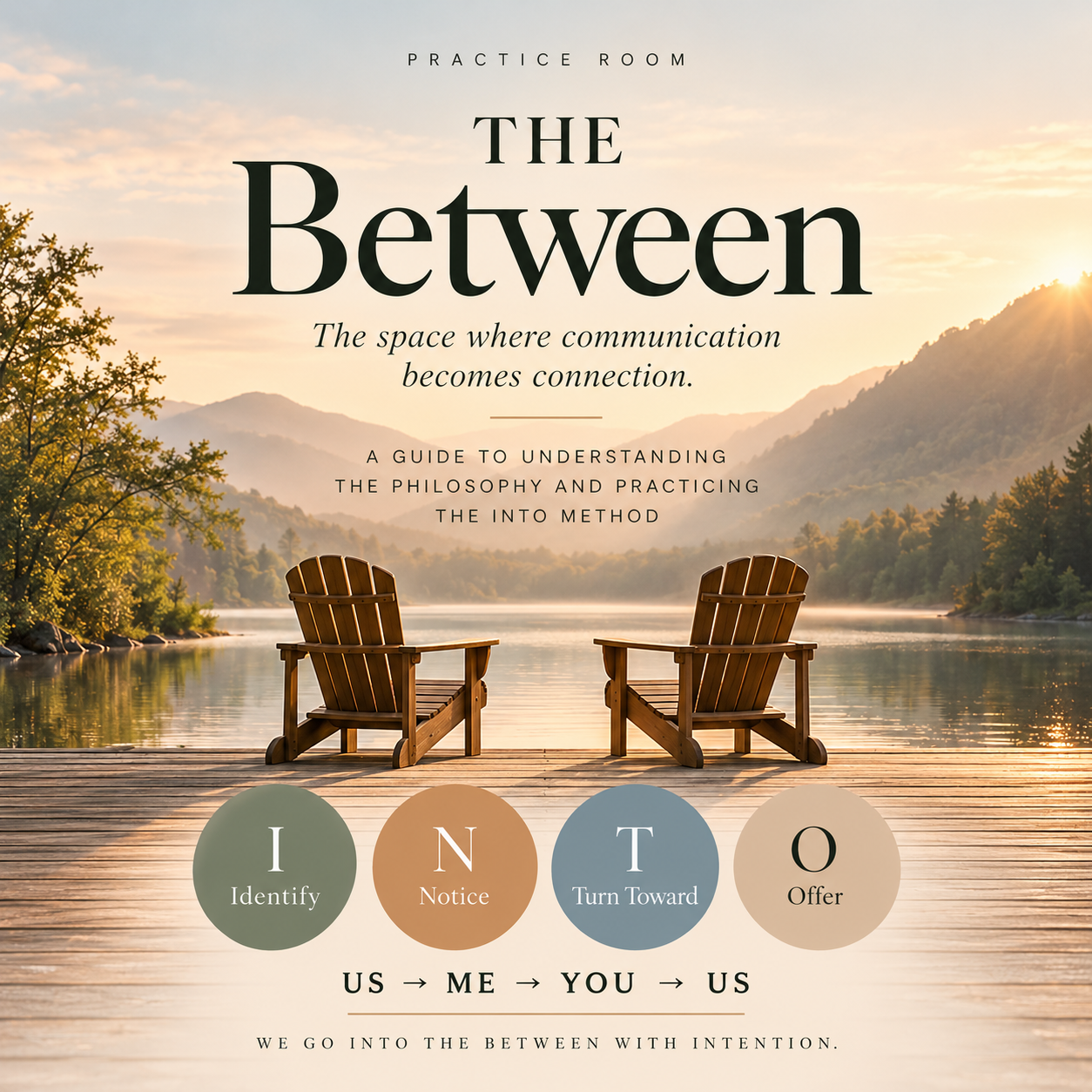
The space where communication becomes connection.
What if the most important part of communication isn't what we say, but what happens between us?
Every conversation creates a space between people. That space is shaped by our experiences, emotions, assumptions, perceptions, and the meaning we give to one another's words.
The Between introduces a different way of thinking about communication—one that moves beyond simply choosing the right words and toward understanding what we bring into our interactions.
Through this introductory guide, you'll explore the philosophy of The Between and discover how to enter that space with greater awareness and intention.
You'll also be introduced to The Between Method, a practical four-step approach called INTO:
I — Identify: Recognize what's happening in the interaction.
N — Notice: Become aware of what you're bringing into the conversation.
T — Turn Toward: Make room to understand the other person's perspective.
O — Offer: Contribute something that moves the interaction forward.
Inside, you'll find relatable examples, opportunities for reflection, and a simple practice to begin applying the philosophy in everyday conversations.
Whether at work, at home, or in the relationships that matter most, The Between invites us to approach communication differently.
Because connection doesn't happen in what I say or what you say alone. It happens in The Between.
Instant digital download. Includes a 7-page introductory guide.
Communication Curse Words
What Not to Say, What to Say Instead, and the Reason It Matters
A practical guide for recognizing five common language patterns that can increase defensiveness, resistance, and misunderstanding—and practicing small shifts that help keep meaning moving.
Conflict can move fast. Something happens, we interpret it, feelings follow, and before we know it, we’re responding to a story that may not be the whole story.
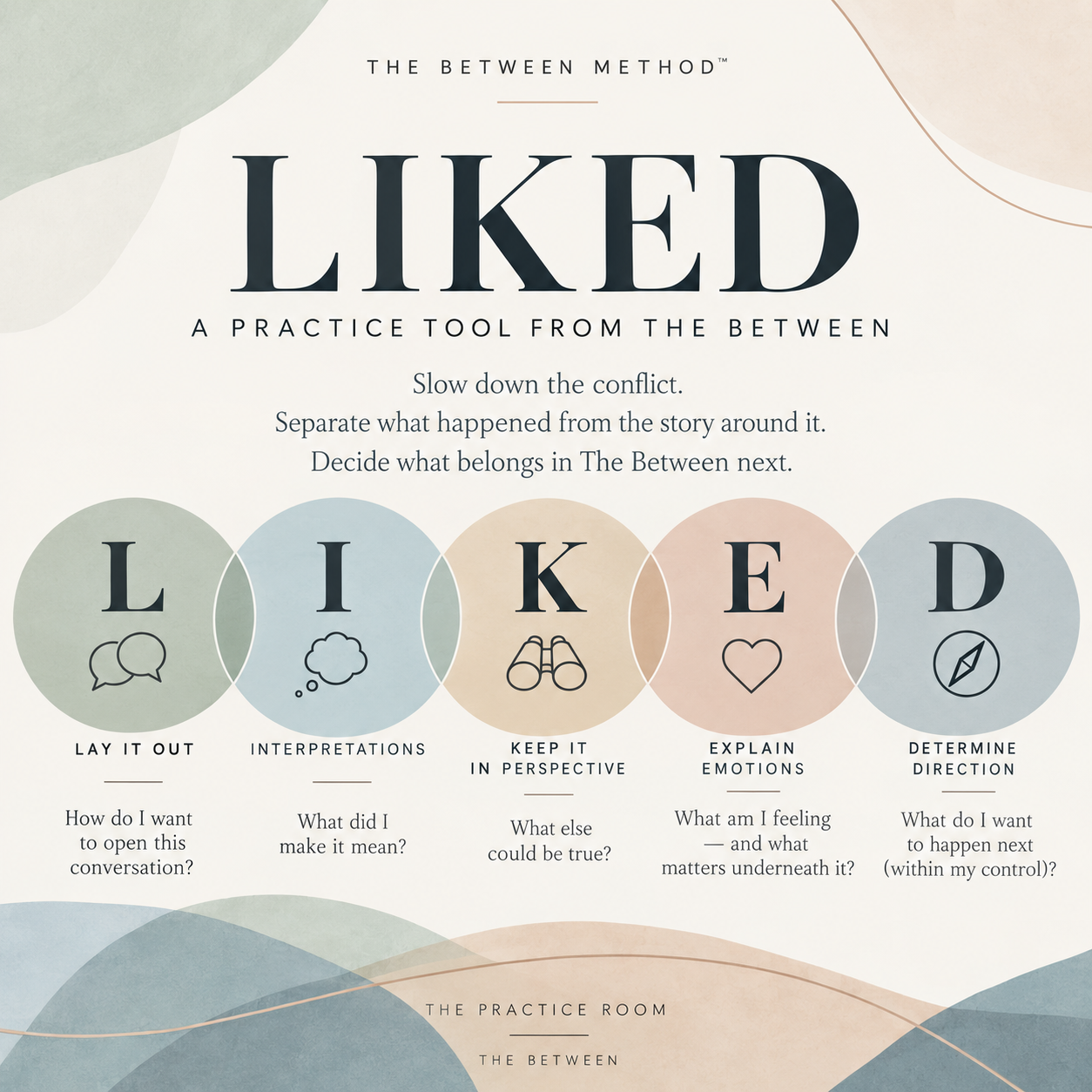
LIKED is a practical framework for slowing down difficult conversations and becoming more intentional about what gets put into The Between.
This guided workbook walks through five steps:
L — Lay It Out
Set the stage for the conversation clearly and without accusation.
I — Interpretations
Separate what happened from how it was interpreted—and learn to communicate that interpretation as a perspective, not a fact.
K — Keep It in Perspective
Recognize what might be missing, what personal experience is influencing the moment, and where another perspective may exist.
E — Explain Emotions
Identify the feelings fueling the conflict and the value, need, goal, or concern underneath them.
D — Determine Direction
Choose a productive next step that stays within personal control.
Inside, you’ll find workplace and relational examples, guided scenarios to work through, and space to apply LIKED to a real conflict of your own.
Slow it down. LIKED it. Then choose what belongs in The Between next.
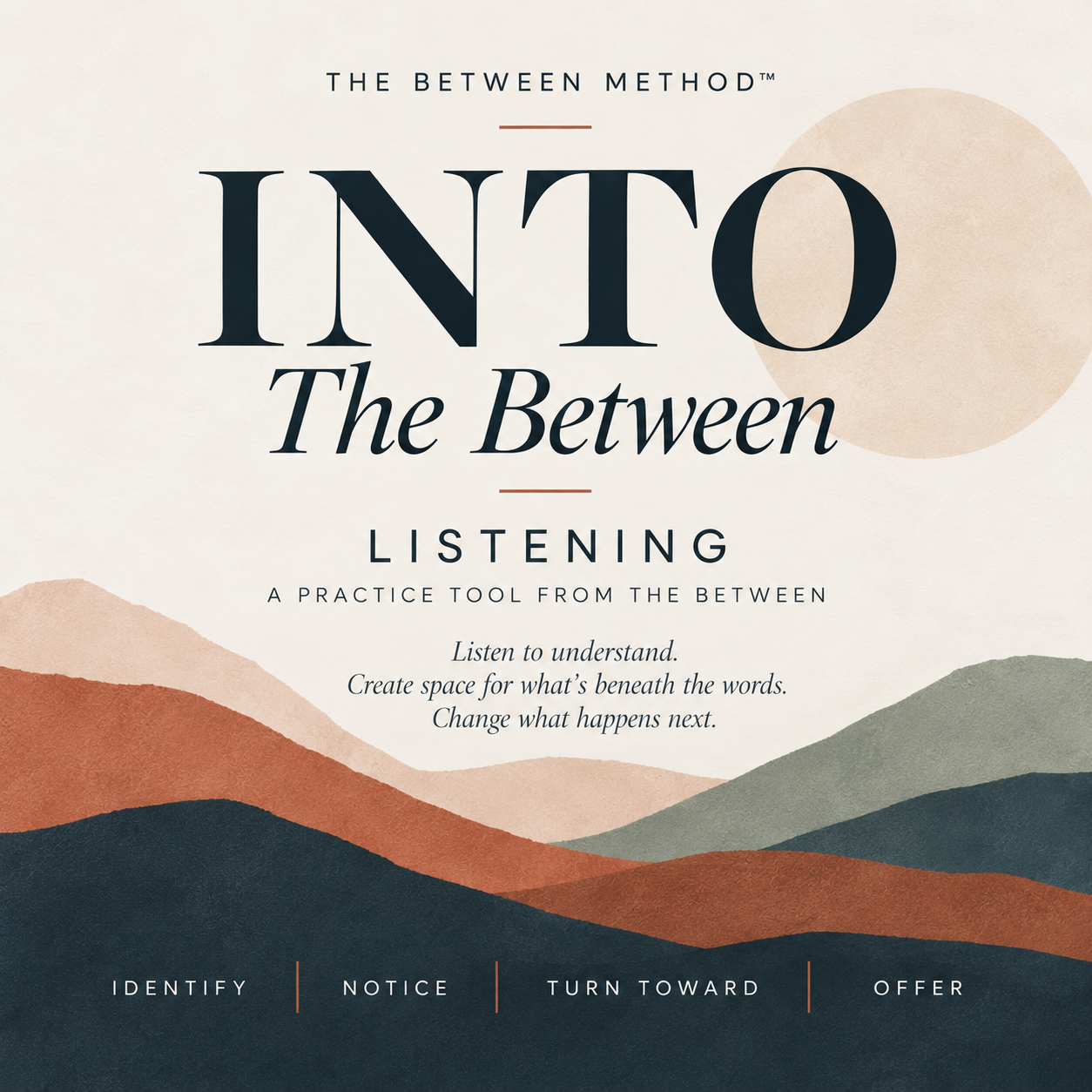
Listening is more than staying quiet while someone else speaks. It is the practice of going INTO The Between—setting aside the urge to defend, fix, advise, interpret, or respond long enough to understand what is actually being communicated.
This Practice Tool helps identify the internal and external barriers that interfere with listening, recognize common ineffective listening patterns, and practice four skills that make understanding visible: paraphrasing, emotional paraphrasing, reframing, and validation.
Then comes the challenge:
No adding until you’ve gone INTO.
Before offering an opinion, explanation, defense, interpretation, or solution, practice demonstrating understanding first.
Because listening isn’t waiting for a turn to add something to The Between.
Listening is how we go INTO it.
Inside this Practice Tool:
Internal + external barriers to listening
Ineffective listening styles—and what drives them
Paraphrasing
Emotional paraphrasing
Reframing
Validation
Guided practice + reflection
The Go INTO Before Adding To listening challenge
The INTO framework: Identify • Notice • Turn Toward • Offer
Designed for conversations at work, at home, and anywhere understanding matters.
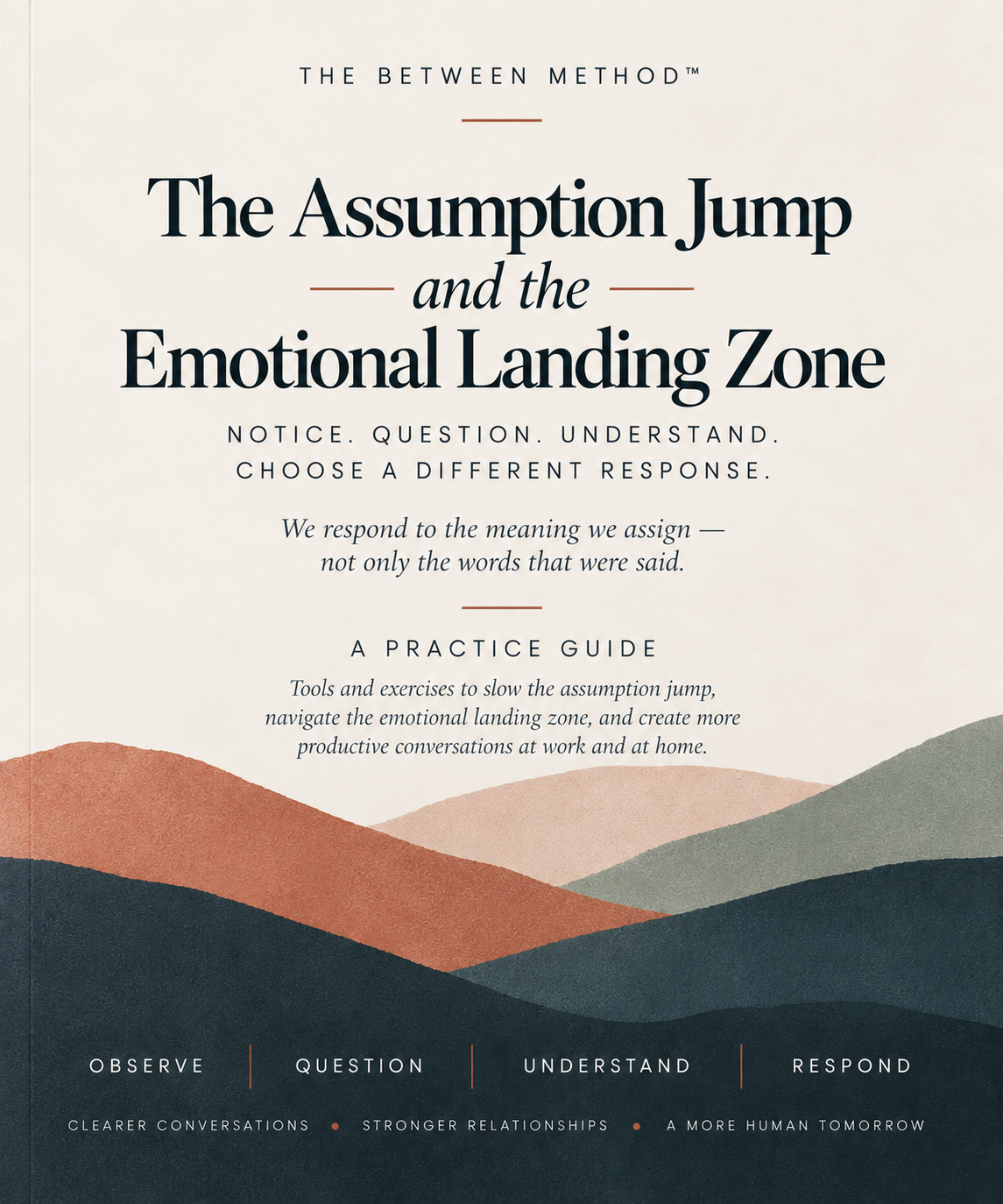
A Practice Guide from The Between Method™
Have you ever reacted to something someone said—only to realize later that you were reacting to what you thought they meant?
That’s the Assumption Jump.
This Practice Guide helps you slow down the space between what was said, the meaning you assigned, where that meaning landed emotionally, and what you chose to do next.
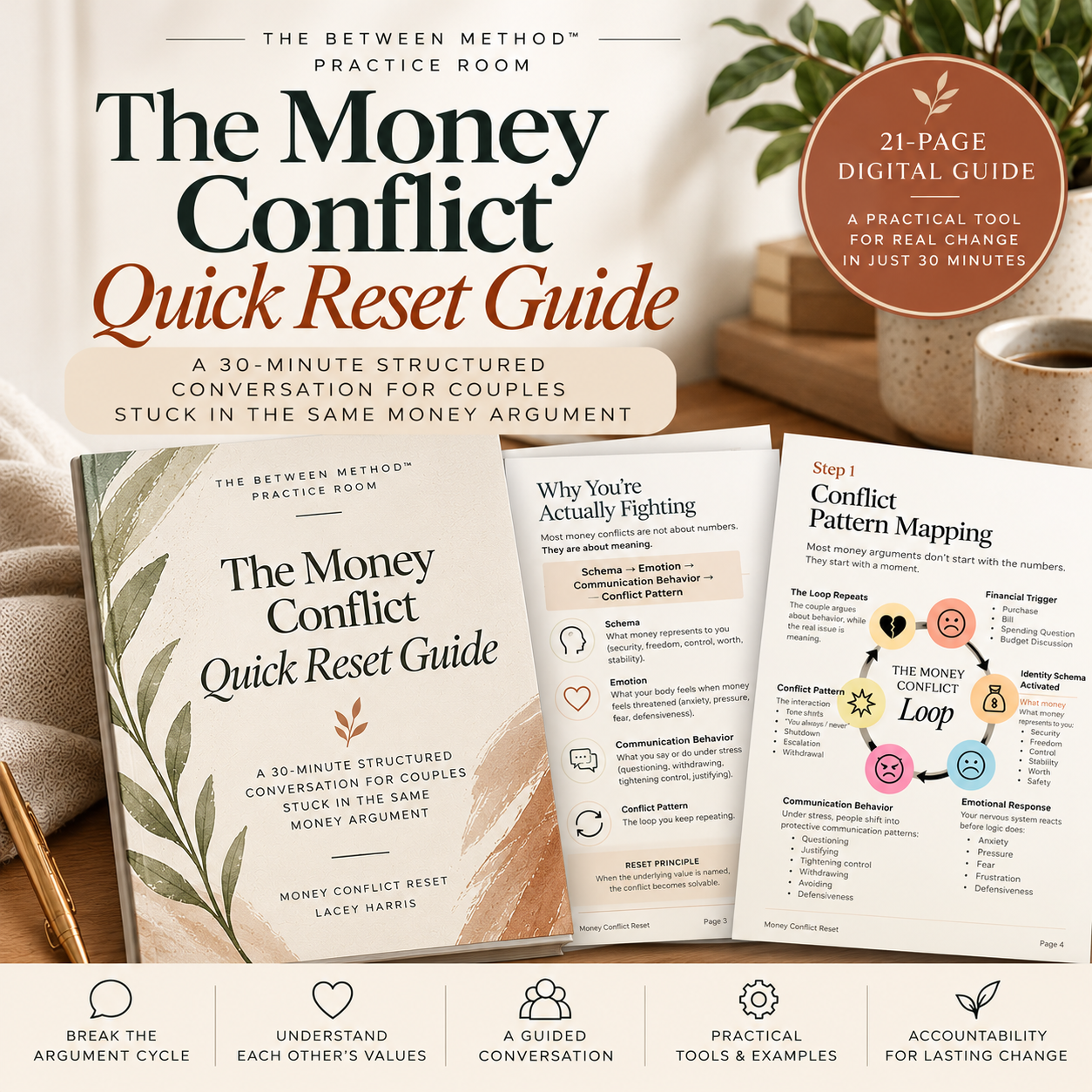
Same money argument. Different conversation.
Ever notice how a simple question about spending can turn into an argument about responsibility, trust, or respect?
The problem isn't always the money. Sometimes it's what money represents.
This 21-page guided resource helps couples recognize the communication patterns keeping them stuck and approach financial disagreements with greater understanding.
What's inside:
Conflict Pattern Mapping — identify the cycle that keeps repeating.
Identity Trigger Reflection — recognize what feels threatened during money conversations.
Value Identification — understand what matters beneath each person's reaction.
The 30-Minute Reset Script — follow a structured conversation designed to build understanding.
Reset and Repair — learn what to do when emotions escalate.
No spreadsheets. No complicated budgeting systems. Just a more intentional way to talk about money.
21-page PDF Digital Download
Part of The Between Method™ Practice Room.
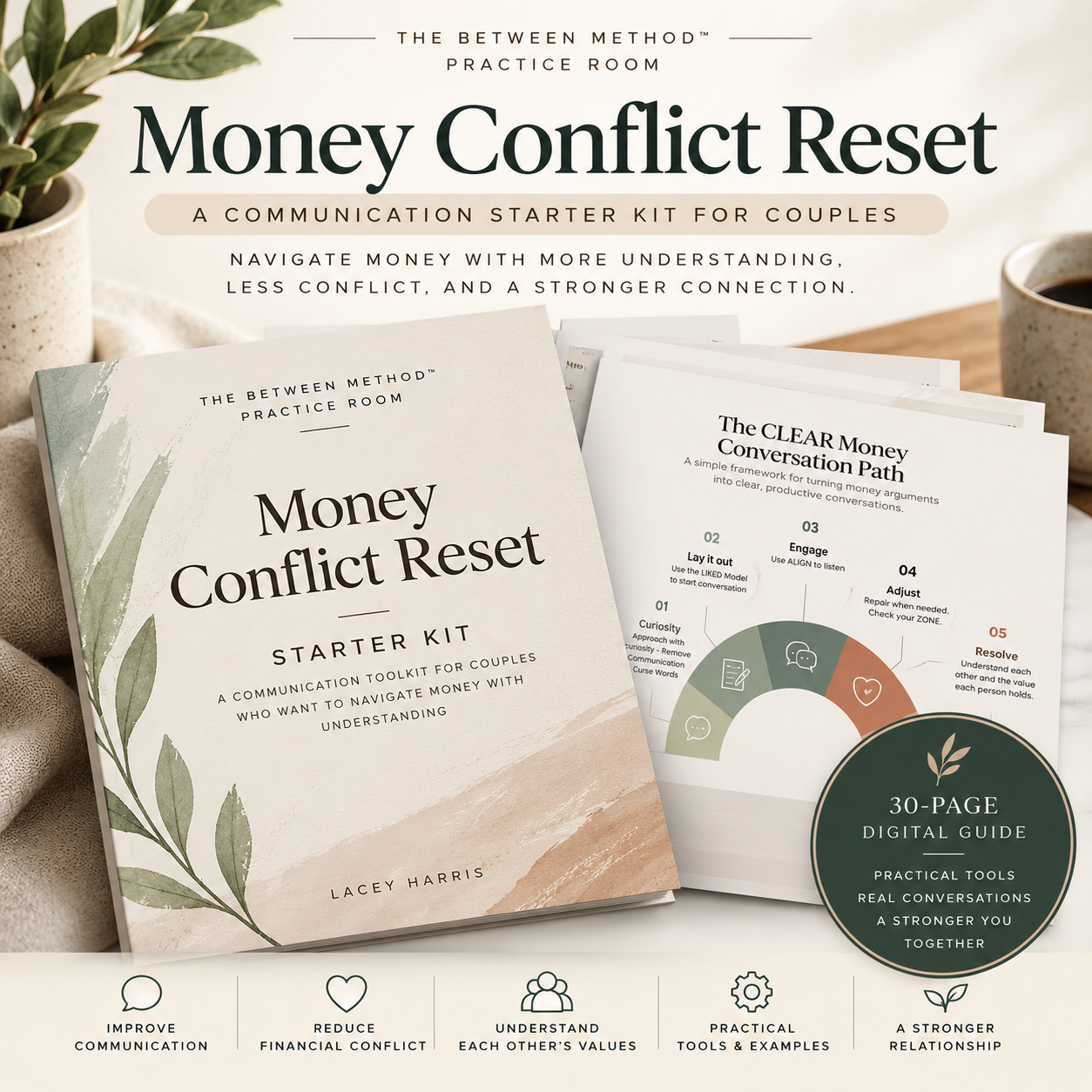
A Communication Starter Kit for Couples
The money isn't always the problem. Sometimes it's the conversation.
A question about spending. A disagreement over saving. An unexpected purchase.
Suddenly, what started as a conversation about money becomes an argument about responsibility, respect, independence, or trust.
Sound familiar?
Money conversations are rarely just about numbers. They're about what those numbers represent to each person.
Money Conflict Reset is a 30-page communication guide designed to help couples recognize the patterns that create financial tension and learn how to navigate those conversations differently.
Discover the CLEAR Money Conversation Path, a five-step approach to more intentional financial conversations:
C — Curiosity: Recognize communication habits that trigger defensiveness and learn how to replace them with curiosity.
L — Lay It Out: Use the LIKED Model to express financial concerns clearly and respectfully.
E — Engage: Practice listening for the values and meaning underneath financial decisions with the ALIGN framework.
A — Adjust: Learn how to repair difficult moments and use the ZONE Reset when emotions escalate.
R — Resolve: Move beyond who's right or wrong and work toward solutions that consider what matters to both people.
Find themselves having the same money arguments.
Struggle to discuss spending, saving, or financial priorities without becoming defensive.
Want to feel heard and understood rather than criticized.
Have different financial values, habits, or expectations.
Want practical communication tools they can begin using together.
This isn't a budgeting system. It's a better way to have the conversations that shape your financial life.
Because the goal isn't to agree about everything.
It's to understand each other well enough to move forward together.
30-page PDF Digital Download | $12.99
Part of The Between Method™ Practice Room.
No results match your search. Try removing a few filters.